Commercial EV TCO Parity: Last-Mile Delivery & 3-Wheelers Cross the Tipping Point
COMMERCIAL EV FLEET VALUE CHAIN & TCO PARITY
Stage 1: Lithium Iron Phosphate (LFP) Cell Pack Synthesis
Stage 2: Powertrain Efficiency & Energy Delivery
Stage 3: Commercial Logistics Fleet Operations (150 km / Day)
Stage 4: Circular Economy & Second-Life BESS Storage
Executive Summary & The Commercial Inflection
India’s electric vehicle transition has decoupled from retail consumer purchase subsidies, propelled by commercial fleet Total Cost of Ownership (TCO) parity. In high-utilization commercial segments—electric 3-Wheelers (e-3W) and last-mile delivery 2-Wheelers (e-2W)—electric vehicles deliver definitive operating cost superiority.
“**Strategic Takeaway:** A commercial 3-wheeler operating 150 km per day incurs an operational fuel cost of **₹0.72 per km (electric)** compared to **₹2.85 per km (diesel)** and **₹1.95 per km (CNG)**. Over a 5-year operating cycle, the EV commercial operator saves **over ₹5.4 Lakhs in cumulative cash expenses**, generating payback on initial vehicle acquisition within 14 months.
— Kunwar Analytics Research Desk
5-Year Commercial 3-Wheeler TCO Benchmark
| Cost Breakdown Element | Diesel Auto (150 km/day) | Electric 3-Wheeler (Swapping BaaS) |
|---|---|---|
| Initial Acquisition Price | ₹3,25,000 | ₹2,10,000 (Ex-Battery BaaS) |
| 5-Year Fuel / Energy Cost | ₹7,80,000 (Diesel @ ₹92/L) | ₹1,98,000 (Battery Swap Subscription) |
| Scheduled Maintenance & Oil | ₹1,15,000 | ₹32,000 (-72% Moving Parts) |
| Residual Resale Value | ₹65,000 | ₹55,000 |
| Total 5-Year Net TCO | ₹11,55,000 (₹4.20 / km) | ₹3,85,000 (₹1.40 / km - 66% Saved) |
Battery Swapping (BaaS) Eliminates Downtime
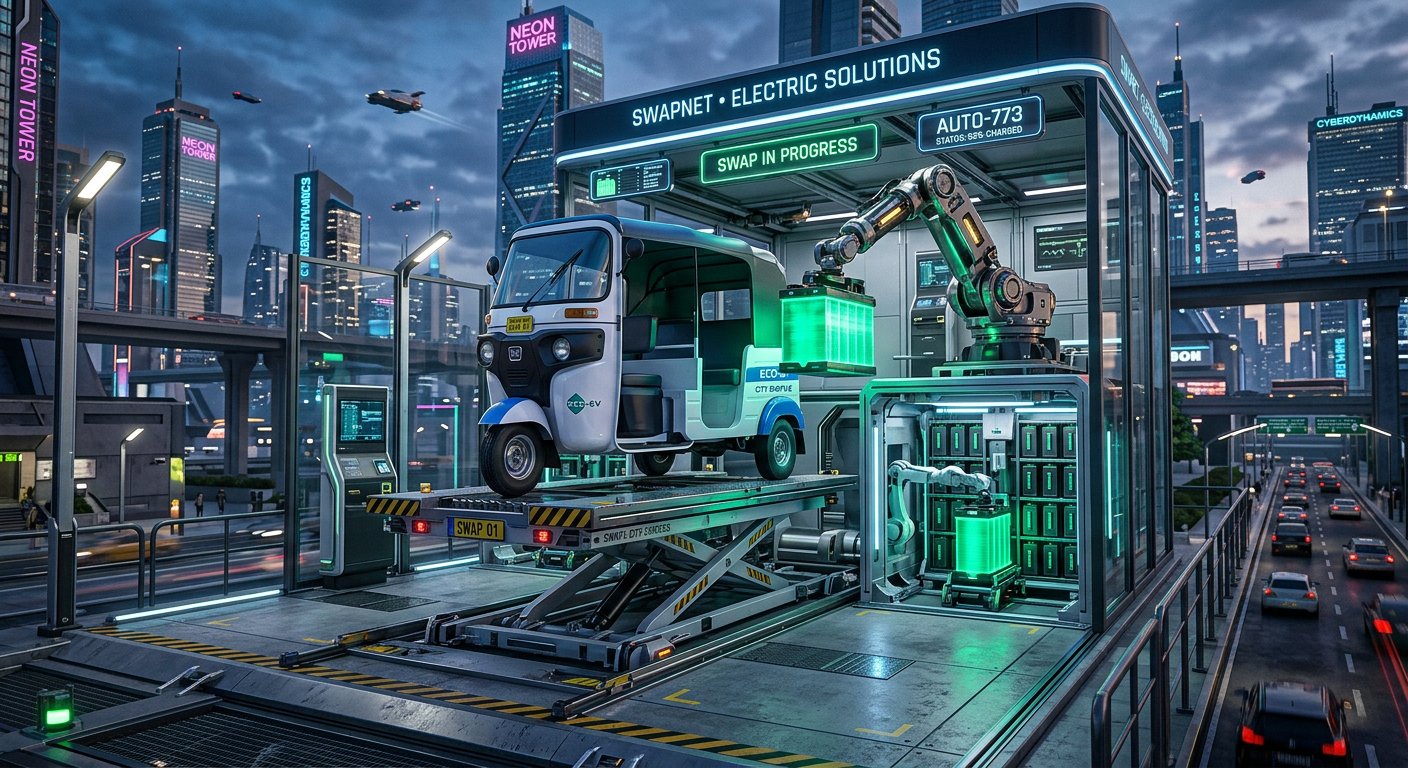
By separating the battery from the vehicle chassis through Battery-as-a-Service (BaaS), commercial drivers avoid 4-hour charging downtime:
- Swap Duration: 90 Seconds automated turnaround.
- Upfront Capex Reduction: 40% reduction in initial purchase price.
- Degradation Risk Transfer: Battery health and lifecycle degradation are fully managed by the energy network operator.
Fleet Operator Strategic Playbook
-
01
Transition 100% of Last-Mile Delivery Fleets to Swappable EVs: Logistics aggregators should partner with standardized battery swapping networks to eliminate charging depot capex.
-
02
Monetize Carbon Credits under Article 6 Frameworks: Bundle fleet telemetry data to generate high-integrity carbon offsets for international corporate buyers.