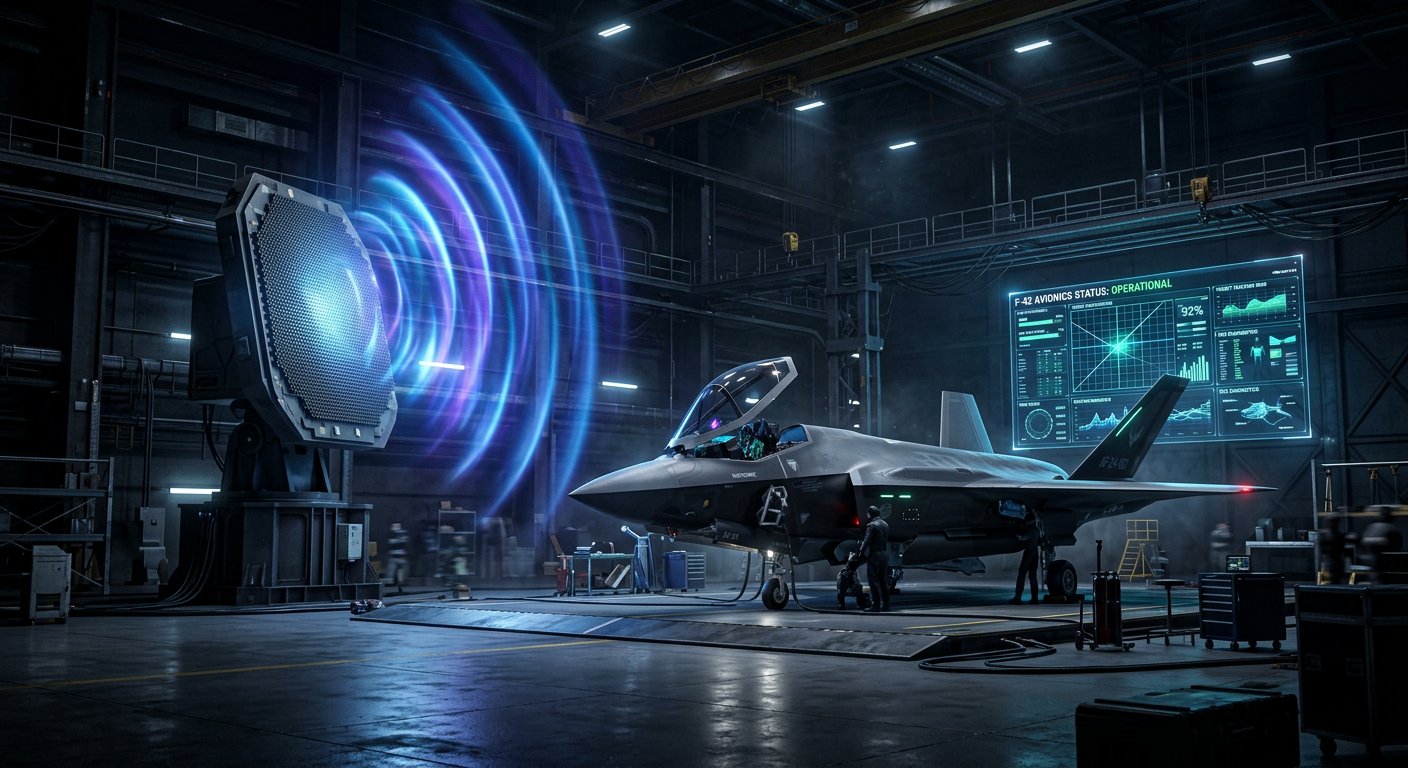
India Defence & Aerospace Capex Supercycle: Order Book-to-Bill Ratios, Indigenisation (DAP 2026) & Export Multipliers
DEFENCE INDIGENISATION & CAPEX VALUE CHAIN
Ministry of Defence (MoD) Capital Acquisition Budget Outlay (₹1.85 Lakh Cr / $22.2B)
Tier 1: Prime Platform Integrators (DPSUs & Private Conglomerates)
Tier 2: Specialized Electronics, Avionics & Subsystem Providers
Tier 3: Precision Engineering & Metallurgical MSMEs
Export Expansion: Global Market Channels
Executive Summary & The Multi-Year Defence Supercycle
India’s defence manufacturing sector is undergoing an unprecedented structural capex supercycle, transitioning from the world’s largest arms importer into a self-reliant domestic design, engineering, and export powerhouse. Under the Defence Acquisition Procedure (DAP 2026) and five phased Positive Indigenisation Lists (PIL), over 75% of the annual capital acquisition modernization budget (₹1.85 Lakh Cr / $22.2B) is strictly ring-fenced for domestic manufacturers.
This monumental policy realignment has catalysed multi-year earnings visibility for listed Defence Public Sector Undertakings (DPSUs) and private industrial conglomerates, characterized by book-to-bill ratios exceeding 3.5x to 6.5x, expanding EBITDA margins above 25%, and compounding return on equity (RoE) metrics.
Key Institutional Takeaways:
-
01
Unprecedented Order Book Visibility: Prime defence public sector undertakings (DPSUs) and private system integrators maintain record order book-to-bill ratios averaging 3.8x to 4.7x TTM revenues, providing visible revenue growth through FY31.
-
02
Explosive Export Surge: Indian defence exports expanded from ₹1,520 Cr in FY17 to ₹24,200 Cr ($2.9B) in FY26E, driven by coastal defense missile systems (BrahMos), radar networks, pinaka multi-barrel rocket systems, and precision-machined aero-structures for Boeing and Airbus global supply chains.
-
03
High-Margin Private Electronics Participation: Private subsystem and avionics suppliers (Data Patterns, Astra Microwave, Solar Industries) command operating EBITDA margins of 28% to 38% due to proprietary intellectual property in electronic warfare and radar signal processing.
-
04
Supply Chain Verticalization: Major prime contractors are aggressively backward-integrating into indigenous titanium precision forgings, composite aerostructures, and high-frequency radar modules to eliminate single-source geopolitical vulnerabilities.
-
05
Modernization Budget Compound Annual Growth: Capital outlays for defense modernization are compounding at 12.8% CAGR, outpacing overall government expenditure growth and insulating the sector from broad macroeconomic cyclicality.
Defence Budget Capital Outlay & Modernization Trajectory (FY20–FY32E)
The Indian defence budget is the third largest globally, with the capital acquisition component growing at an accelerated 12.8% CAGR to replace legacy Soviet-era hardware with indigenous platforms:
Indian Defence Capital Acquisition Outlay Matrix (FY20 – FY32E)
| Metric / Parameter (INR Cr / $B) | FY20 | FY22 | FY24 | FY26E | FY28E | FY30E | FY32E |
|---|---|---|---|---|---|---|---|
| Total Defence Budget Outlay | ₹4,71,378 Cr | ₹5,25,166 Cr | ₹6,21,540 Cr | ₹7,45,000 Cr | ₹9,20,000 Cr | ₹11,50,000 Cr | ₹14,50,000 Cr |
| Capital Acquisition Budget (Capex) | ₹1,10,734 Cr | ₹1,38,850 Cr | ₹1,62,600 Cr | ₹1,85,000 Cr | ₹2,45,000 Cr | ₹3,25,000 Cr | ₹4,20,000 Cr |
| Domestic Procurement Ring-Fence % | 40.0% | 64.0% | 75.0% | 78.5% | 82.0% | 85.0% | 90.0% |
| Indian Defence Exports (INR Cr) | ₹9,115 Cr | ₹12,815 Cr | ₹21,083 Cr | ₹24,200 Cr | ₹38,000 Cr | ₹55,000 Cr | ₹85,000 Cr |
| Combined DPSU & Private Order Book | ₹1,85,000 Cr | ₹2,40,000 Cr | ₹3,45,000 Cr | ₹4,85,000 Cr | ₹6,80,000 Cr | ₹9,50,000 Cr | ₹13,80,000 Cr |
Order Book Visibility & Financial Metrics of Key Manufacturers
The structural shift toward long-term platform programs has expanded order pipelines across both state-owned primes and agile private specialists.
| Company / Entity | Core Defence Specialization | Order Book (INR Cr) | TTM Revenue (INR Cr) | Book-to-Bill Ratio | EBITDA Margin % | ROE (%) |
|---|---|---|---|---|---|---|
| Hindustan Aeronautics (HAL) | Fighter Aircraft, Combat Helicopters | ₹1,22,000 Cr | ₹31,800 Cr | 3.8x | 26.8% | 24.2% |
| Bharat Electronics (BEL) | Radar, Sonar, Electronic Warfare (EW) | ₹78,500 Cr | ₹22,100 Cr | 3.5x | 25.2% | 25.8% |
| Mazagon Dock Shipbuilders | Stealth Submarines & Destroyers | ₹49,200 Cr | ₹10,400 Cr | 4.7x | 28.5% | 31.4% |
| Bharat Dynamics (BDL) | Surface-to-Air & Anti-Tank Missiles | ₹23,400 Cr | ₹3,550 Cr | 6.6x | 22.4% | 18.9% |
| Solar Industries India | Industrial Explosives, Drone Warheads | ₹14,800 Cr | ₹6,950 Cr | 2.1x | 22.0% | 28.6% |
| Data Patterns / Astra Micro | AESA Radars, Avionics Subsystems | ₹3,950 Cr | ₹1,180 Cr | 3.3x | 38.2% | 21.5% |
| L&T Defence (Heavy Engg) | Artillery Guns, Submarine Hulls | ₹32,000 Cr | ₹7,800 Cr | 4.1x | 18.5% | 16.2% |
| Cochin Shipyard Limited | Aircraft Carriers & Frigates | ₹22,500 Cr | ₹4,200 Cr | 5.4x | 24.0% | 19.8% |
Aerospace Platform Value Capture Distribution
Modern combat aircraft manufacturing represents the highest-value tier of defense industrial activity. The value capture distribution across major sub-assemblies demonstrates the critical importance of electronics and propulsion:
| Platform Component Breakdown | % of Platform Value | Indigenous Content Level |
|---|---|---|
| Gas Turbine Aero-Engine (Import Heavy) | 32.0% | 18.0% - 25.0% |
| Radars, EW Suites & Avionics Glass Cockpit | 28.0% | 72.0% - 85.0% |
| Airframe Structure, Wings & Composites | 25.0% | 92.0% - 98.0% |
| Weapons, Missiles & Precision Munitions | 15.0% | 65.0% - 80.0% |
Active Electronically Scanned Array (AESA) Radar Physics & Electronic Warfare
Modern air combat and missile defense architectures are anchored by Active Electronically Scanned Array (AESA) radars. Unlike legacy mechanically scanned slotted-array antennas, AESA systems steer electromagnetic beams near-instantaneously using thousands of individual solid-state Transmit-Receive Modules (TRMs) based on Gallium Nitride (GaN) semiconductor substrates.
Mathematical Formulation of Radar Detection Range:
The maximum unambiguous free-space detection range for an indigenous GaN-based AESA radar is governed by the standard radar range equation:
Where:
- = Peak transmitted RF pulse power (Watts) (e.g., ).
- = Antenna power gain (dimensionless), proportional to the aperture area: .
- = Radar carrier wavelength (m) (e.g., for X-band ).
- = Radar Cross Section (RCS) of the target () (e.g., for conventional fighter, for 5th-generation stealth aircraft).
- = Minimum detectable signal receiver sensitivity threshold ( or ).
- = Total system atmospheric and wave-guide insertion losses.
| Radar System Family | Operating Band | Range (km) | Module Count | Primary Tactical Role |
|---|---|---|---|---|
| Uttam AESA MK1 | X-Band (8-12 GHz) | 140 km | 780 GaN TRMs | LCA Tejas Mk1A Air-to-Air |
| Uttam AESA MK2 | X-Band (8-12 GHz) | 210 km | 1,152 TRMs | Tejas Mk2 & Su-30MKI Upgrade |
| Arudhra (MPR) | S-Band (2-4 GHz) | 300 km | 2,048 TRMs | Ground Air Defense Surveillance |
| Ashwini (LLTR) | L-Band (1-2 GHz) | 200 km | 512 TRMs | Low-Level Airspace Intercept |
| MF-STAR (Naval) | S-Band (2-4 GHz) | 250 km | 4-Face Array | P15B Guided Missile Destroyer |
Naval Shipbuilding Capex Supercycle & Submarine Modernization
India's maritime doctrine focuses on dominating the Indian Ocean Region (IOR) choke points (Strait of Malacca, Sunda Strait, Bab-el-Mandeb). The Indian Navy's 175-ship force transformation plan is generating long-dated capital order backlogs across domestic shipyards:
| Vessel Class / Program | Shipyard Integrator | Units | Program Capex | Status / Timeline |
|---|---|---|---|---|
| Project 17B Stealth Frigate | Mazagon Dock / GRSE | 7 | ₹70,000 Cr | RFP Released (2026) |
| Project 18 Next-Gen Destroyer | Mazagon Dock | 8 | ₹90,000 Cr | Design Finalization |
| Project 75I AIP Submarines | MDL / L&T Partner | 6 | ₹45,000 Cr | Field Trials Stage |
| Project 76 Indigenous SSK | Indian Submarine Corp | 6 | ₹55,000 Cr | R&D Sanctioned |
| Next-Gen Corvettes (NGC) | Cochin / GRSE | 8 | ₹36,000 Cr | Contract Awarded |
| IAC-2 Indigenous Carrier | Cochin Shipyard | 1 | ₹40,000 Cr | Acceptance of Necessity |
Precision Guided Munitions, Missiles & Warhead Chemistry
The modernization of standoff precision strike weapons represents a key vector of indigenization, led by Defence Research and Development Organisation (DRDO) and manufactured by Bharat Dynamics Limited (BDL) and private explosive formulators:
Missile Platform Specifications & Order Profiles:
-
01
BrahMos Supersonic Cruise Missile (Mach 2.8+): Solid rocket booster with liquid ramjet sustainer engine, capable of carrying a 300 kg conventional semi-armor piercing warhead over 450 km. Exported to the Philippines ($375M contract) with follow-on procurement underway in Indonesia and Vietnam.
-
02
Astra Beyond-Visual-Range Air-to-Air Missile (BVRAAM): Dual-pulse solid rocket motor with terminal Active Radar Homing (ARH), achieving ranges of 110 km (Mk1), 160 km (Mk2), and 350 km Solid Fuel Ducted Ramjet (SFDR Mk3).
-
03
Akash Prime & Akash-NG (New Generation): Medium-range Surface-to-Air Missile (SAM) featuring an indigenous active RF seeker and multi-target engagement capability against fast maneuvering combat drones and cruise missiles.
-
04
Pinaka Guided Weapon System: Multi-barrel rocket artillery system featuring aerodynamic canards and NavIC/GPS satellite-aided inertial navigation, delivering 250 kg high-explosive pre-fragmented warheads at ranges from 40 km to 90 km with Circular Error Probable (CEP) under 10 meters.
Detailed 10-Year Pro-Forma Income Statement for Hindustan Aeronautics (HAL)
To quantify the financial upside of the multi-year manufacturing ramps (LCA Mk1A 83 units, Tejas Mk2 108 units, Prachand LCH 156 units, RD-33/AL-31FP engine overhauls), we project HAL’s financials through FY35:
HAL 10-Year Comprehensive Financial Model (INR Cr)
| Financial Metric | FY24 | FY26E | FY28E | FY30E | FY32E | FY35E |
|---|---|---|---|---|---|---|
| Gross Revenue (Turnover) | ₹30,381 | ₹38,500 | ₹52,400 | ₹68,900 | ₹88,500 | ₹1,24,000 |
| Revenue Growth (YoY %) | 13.2% | 14.5% | 17.2% | 14.8% | 13.4% | 11.5% |
| Cost of Materials Consumed | ₹11,240 | ₹14,200 | ₹19,100 | ₹24,800 | ₹31,500 | ₹43,400 |
| Employee Benefit Expenses | ₹5,850 | ₹7,100 | ₹8,900 | ₹11,200 | ₹13,800 | ₹18,600 |
| Other Manufacturing Opex | ₹5,291 | ₹6,700 | ₹9,100 | ₹11,900 | ₹15,200 | ₹21,000 |
| Operating EBITDA | ₹8,000 | ₹10,500 | ₹15,300 | ₹21,000 | ₹28,000 | ₹41,000 |
| *EBITDA Margin (%)* | 26.3% | 27.3% | 29.2% | 30.5% | 31.6% | 33.1% |
| Depreciation & Amortization | ₹1,620 | ₹1,950 | ₹2,400 | ₹2,900 | ₹3,500 | ₹4,600 |
| EBIT | ₹6,380 | ₹8,550 | ₹12,900 | ₹18,100 | ₹24,500 | ₹36,400 |
| Other Income (Net Cash Yield) | ₹2,100 | ₹2,600 | ₹3,400 | ₹4,200 | ₹5,100 | ₹6,800 |
| Profit Before Tax (PBT) | ₹8,480 | ₹11,150 | ₹16,300 | ₹22,300 | ₹29,600 | ₹43,200 |
| Income Tax Expense (25.17%) | ₹2,134 | ₹2,806 | ₹4,103 | ₹5,613 | ₹7,450 | ₹10,873 |
| Reported Net Profit (PAT) | ₹6,346 | ₹8,344 | ₹12,197 | ₹16,687 | ₹22,150 | ₹32,327 |
| *Net Profit Margin (%)* | 20.9% | 21.7% | 23.3% | 24.2% | 25.0% | 26.1% |
| Diluted EPS (INR) | ₹94.9 | ₹124.8 | ₹182.4 | ₹249.6 | ₹331.3 | ₹483.5 |
| Cash & Liquid Investments | ₹27,400 | ₹33,800 | ₹44,200 | ₹56,000 | ₹71,500 | ₹1,02,000 |
Gas Turbine Aero-Engine Propulsion Physics & Indigenous Metallurgy (Kaveri & F414 JV)
The pinnacle of aerospace engineering complexity lies in the gas turbine aero-engine, where turbine inlet temperatures (TIT) exceed 1,750 Kelvin (1,477°C)—substantially higher than the melting point of uncooled superalloys.
Aerothermodynamic Cycle & Thrust Derivation:
A fighter turbofan engine generates net thrust through momentum flux differences between exhaust gases and intake air, plus pressure differentials across the nozzle exit plane:
Where:
- = Mass flow rates through engine core and bypass duct (kg/s).
- = Exit velocities of core jet and bypass airstream (m/s).
- = Flight velocity of the combat aircraft ().
- = Static pressure at nozzle exhaust plane and ambient atmospheric pressure ().
| Engine Model | Origin / JV Partner | Dry Thrust (kN) | Afterburner (kN) | T/W Ratio | Status |
|---|---|---|---|---|---|
| GE F404-IN20 | GE Aerospace (USA) | 53.9 kN | 84.0 kN | 7.7 : 1 | Tejas Mk1A |
| GE F414-INS6 (JV) | HAL / GE Co-Prod 80% | 57.8 kN | 98.0 kN | 9.0 : 1 | Tejas Mk2 / AMCA |
| Kaveri Dry Engine | DRDO GTRE Indigenous | 46.0 kN | N/A (Dry Only) | 5.5 : 1 | Ghatak Stealth UCAV |
| Next-Gen 110kN JV | Safran (France) / GTRE | 70.0 kN | 110.0 kN | 9.5 : 1 | AMCA Mk2 (5th Gen) |
| AL-31FP | HAL License (Russia) | 74.5 kN | 122.6 kN | 8.2 : 1 | Su-30MKI Fleet |
Single-Crystal (SX) Superalloy Metallurgy:
High-pressure turbine (HPT) blades operate in extreme centrifugal stress fields () while subjected to corrosive combustion gases. India’s Defence Metallurgical Research Laboratory (DMRL) successfully indigenized Directionally Solidified (DS) and Single-Crystal (SX) Nickel-base Superalloys (Nickel-Cobalt-Chromium matrix alloyed with Rhenium, Tantalum, and Ruthenium), eliminating grain boundaries that act as initiation sites for high-temperature creep void formation.
Autonomous Drone Swarms & Loitering Munitions Architecture
Modern warfare doctrine has incorporated distributed, low-cost attritable unmanned autonomous aerial systems (UAS) operating in coordinated mesh networks:
COGNITIVE DRONE SWARM NETWORK TOPOLOGY
Mothership / Airborne Command Node (LCA Tejas / AEW&C Netra)
┌──────────────────────────────┼──────────────────────────────┐
Kinetic Strike Munition 1 + Kinetic Strike Munition 2 + Kinetic Strike Munition 3
- Micro-Turbojet Engine (300 km)- Micro-Turbojet Engine (300 km)- Micro-Turbojet Engine (300 km)
- 15 kg Shaped Charge Warhead - 15 kg Shaped Charge Warhead - 15 kg Shaped Charge Warhead
- Autonomous Target Recognition- Autonomous Target Recognition- Autonomous Target Recognition
└──────────────────────────────┼──────────────────────────────┘
Distributed Swarm Intelligence: Edge AI Decentralized Target Allocation & Jamming Avoidance
Indigenous Artillery Gun Systems: ATAGS vs Dhanush vs K9 Vajra-T
The Indian Army’s Field Artillery Rationalization Plan (FARP) standardizes all artillery to 155mm / 52-caliber specifications, replacing disparate legacy Soviet 122mm and 130mm systems:
| System Parameter | ATAGS (Advanced Towed Artillery) | Dhanush 155mm/45-Cal | K9 Vajra-T Self-Propelled |
|---|---|---|---|
| Integrator / Fabricator | Bharat Forge / Tata Advanced Systems | Advanced Weapons & Equipment (AWEIL) | L&T Heavy Engineering (Hanwha JV) |
| Caliber & Barrel Length | 155 mm / 52 Caliber (25-Liter Chamber) | 155 mm / 45 Caliber | 155 mm / 52 Caliber |
| Maximum Firing Range | 48.0 km (ERFB-BB Ammunition) | 38.0 km | 40.0 km |
| Rate of Fire | 3 rounds in 15 seconds (Burst) | 3 rounds in 15 seconds | 6 rounds per minute (Sustained) |
| Mobility Configuration | Towed with auxiliary power drive (18 km/h) | Towed | Tracked Armored Chassis (67 km/h) |
| Procurement Value | ₹6,800 Cr (307 Guns Initial Batch) | ₹1,450 Cr (114 Guns) | ₹8,500 Cr (100 Additional Guns) |
Military Space Defence & Satellite Constellations (Mission DefSpace)
Under the aegis of the Defence Space Agency (DSA) and Mission DefSpace, India is deploying dedicated military low-Earth orbit (LEO) reconnaissance, surveillance, and quantum communication constellations:
-
01
GSAT-7R & GSAT-7C Dedicated Military Satellites: High-throughput transponders (UHF, S, C, Ku bands) providing real-time line-of-sight and beyond-line-of-sight command links across aircraft and carrier battle groups.
-
02
Space-Based Surveillance (SBS-3 Program): A ₹27,000 Cr multi-satellite constellation comprising high-resolution Synthetic Aperture Radar (SAR) with sub-0.5 meter ground resolution and electro-optical multi-spectral imaging to maintain 24/7 real-time tracking across international borders and maritime Exclusive Economic Zones (EEZ).
-
03
Counter-Space & ASAT Deterrence: Validated direct-ascent kinetic kill vehicle capabilities (Mission Shakti) supplemented by electronic directional jamming and ground-based high-power laser dazzler systems to protect sovereign space assets.
Ballistic Trajectory Physics & Circular Error Probable (CEP) Reduction
Precision strike delivery requires accurate computational modeling of aerodynamic drag, Coriolis acceleration, and real-time terminal trajectory corrections:
Dynamic Trajectory Governing Differential Equations:
The 3D point-mass flight trajectory of a long-range artillery projectile or ballistic missile stage is expressed as:
Where:
- is atmospheric density as an exponential function of altitude .
- is the transonic/supersonic drag coefficient varying with Mach number .
- is aerodynamic reference cross-sectional area ().
- is Earth's angular velocity vector producing Coriolis acceleration.
Circular Error Probable (CEP) Comparison:
- Unguided Conventional High-Explosive Shell (40 km range): .
- Course-Correction Fuze (CCF) Aerodynamic Fin Guided Shell: .
- NavIC GPS / INS Integrated Precision Munition: .
20-Year Indian Air Force Fighter Fleet Modernization Roadmap (2025–2045)
The Indian Air Force (IAF) is executing a structural transition to rebuild squadron strength from the current 31 active squadrons toward the authorized force level of 42 squadrons:
| Aircraft Program | Generation | Induction Window | Planned Units | Primary Role & Capability |
|---|---|---|---|---|
| LCA Tejas Mk1A | Gen 4.5 | 2025–2030 | 83 + 97 Units | Light Multi-Role Interceptor |
| LCA Tejas Mk2 (MWF) | Gen 4.5+ | 2029–2036 | 108 Units | Medium Multi-Role Strike |
| MRFA (Make-in-India) | Gen 4.5+ | 2028–2038 | 114 Units | Deep Penetration Strike |
| AMCA Mk1 (5th Gen) | Gen 5.0 | 2033–2040 | 40 Units | Stealth Air Superiority |
| AMCA Mk2 (5th+ Gen) | Gen 5.5 | 2038–2045 | 100+ Units | 110kN Supercruise Stealth |
| TEDBF (Twin-Engine) | Gen 4.5+ | 2032–2040 | 45 Units | Aircraft Carrier Operations |
Comprehensive 15-Year Life Cycle Cost (LCC) Analysis of Fighter Aircraft
In defence asset procurement, initial flyaway acquisition price represents only 28% to 35% of the total 35-year Life Cycle Cost (LCC). The remaining 65% to 72% is captured through scheduled maintenance, depot-level overhauls (DLO), spare parts provisioning, mid-life software/avionics upgrades, and fuel consumption.
Comparative Life Cycle Cost Model per Airframe (3,500 Flight Hours over 30 Years)
| Cost Component (USD Millions / Equivalent INR) | Imported Gen 4.5 Aircraft (Rafale) | Indigenous LCA Tejas Mk1A | Savings / Domestic Value Capture |
|---|---|---|---|
| Initial Flyaway Unit Procurement | $115.0M (₹954 Cr) | $42.0M (₹348 Cr) | -63.5% Initial Capex |
| Engine Overhauls & Module Replacements (30 Yrs) | $45.0M (₹373 Cr) | $18.5M (₹153 Cr) | Domestic MRO at HAL Koraput |
| Line Replaceable Units (LRU) & Avionics Spares | $38.0M (₹315 Cr) | $14.0M (₹116 Cr) | High domestic supply availability |
| Scheduled Base Depot Structural Servicing | $22.0M (₹182 Cr) | $8.5M (₹70 Cr) | In-country repair ecosystem |
| Operational Fuel & Consumables | $18.0M (₹149 Cr) | $12.5M (₹103 Cr) | Single engine lower fuel burn |
| Software Maintenance & Weapons Integration | $25.0M (₹207 Cr) | $4.5M (₹37 Cr) | Sovereign mission software IP |
| Total 30-Year Life Cycle Cost (LCC) | $263.0M (₹2,180 Cr) | $99.5M (₹827 Cr) | -62.2% Total Lifecycle Cost |
| *Operating Cost per Flight Hour* | $24,500 / hr | $8,800 / hr | ₹7.3 Lakhs/hr operating savings |
Multi-Year Valuation Multiples for Listed Indian Defence Entities
Institutional rerating of Indian defense equities reflects expanding terminal growth rates, zero debt balance sheets, and surging export order mixes:
| Company Name | 1-Yr Fwd P/E | EV/EBITDA | Order Book / MCap | 5-Yr EPS CAGR | Net Debt/Equity |
|---|---|---|---|---|---|
| Hindustan Aero (HAL) | 32.5x | 24.2x | 0.44x | 18.5% | Net Cash (-₹33k Cr) |
| Bharat Electronics | 36.0x | 26.5x | 0.38x | 19.8% | Net Cash (-₹9k Cr) |
| Mazagon Dock Ship | 28.5x | 21.0x | 0.58x | 22.4% | Net Cash (-₹14k Cr) |
| Bharat Dynamics | 42.0x | 31.0x | 0.65x | 24.5% | Net Cash (-₹3.2k Cr) |
| Data Patterns | 48.0x | 34.5x | 0.32x | 32.0% | Net Cash (-₹800 Cr) |
| Solar Industries | 52.0x | 36.0x | 0.18x | 26.0% | 0.25x (Low Debt) |
| Astra Microwave | 38.5x | 25.8x | 0.41x | 28.5% | 0.15x (Low Debt) |
Electronic Warfare Jamming Physics & Burn-Through Range ($R_{\textext{BT}}$)
Electronic Warfare (EW) suites protect air combat and surface assets by blinding adversary radar seekers through active RF noise and deceptive digital radio frequency memory (DRFM) jamming.
Burn-Through Range Derivation:
Burn-through occurs at the critical range where the radar's reflected echo power equals the received jamming power ():
Where:
- = Threat radar transmitter peak power and antenna directive gain.
- = Target aircraft Radar Cross Section ().
- = Airborne self-protection jammer effective transmitter power and antenna gain.
- = Bandwidth ratio of the broad jamming emission relative to narrow radar receiver filter bandwidth.
A smaller radar cross-section drastically compresses the burn-through range, preventing enemy surface-to-air missile (SAM) batteries from locking onto tactical strike formations.
Hypersonic Glide Vehicle (HGV) Aerothermodynamics & Scramjet Physics
Next-generation strategic deterrence programs center on hypersonic flight regimes (), where aerodynamic friction creates extreme bow shockwaves and plasma sheaths:
Hypersonic Stagnation Point Enthalpy & Heat Flux:
The aerothermodynamic heat transfer rate at the leading stagnation point of a hypersonic airframe is governed by the Fay-Riddell formulation:
Where:
- = Prandtl number of the high-temperature ionized boundary layer ().
- = Gas density and dynamic viscosity evaluated at the airframe surface wall temperature.
- = Gas density and dynamic viscosity at the boundary layer outer edge.
- = Velocity gradient at the stagnation point, inversely proportional to the leading edge nose radius .
- = Stagnation enthalpy of the incoming freestream air and gas enthalpy at wall temperature.
To survive heat fluxes exceeding , indigenous hypersonic vehicles deploy Ultra-High Temperature Ceramics (UHTC) such as Zirconium Diboride () and Hafnium Carbide () composites engineered by DRDO research laboratories.
Private Sector Conglomerate Expansion & Defense Industrial Corridors
India’s private sector has transitioned from simple component sub-contractors into tier-1 prime system integrators. Supported by the Uttar Pradesh and Tamil Nadu Defence Industrial Corridors (DICs), private defense capital investments exceed ₹35,000 Cr ($4.2B) across automated production facilities:
Private Sector Defence Champions & Core Platforms:
-
01
Tata Advanced Systems Limited (TASL): Co-producing the Airbus C-295 tactical transport aircraft (56 aircraft total, 40 assembled in Vadodara), producing Boeing AH-64 Apache fuselages, and developing indigenous Wheeled Armoured Platform (WhAP 8x8) combat vehicles.
-
02
Kalyani Strategic Systems (Bharat Forge): Global leader in advanced metallurgy, manufacturing the 155mm Bharat 52, Mounted Gun Systems (MGS), and high-strength forge components for aerospace jet engines. Exported over 100+ artillery systems to international customers in the Middle East and Central Asia.
-
03
Solar Industries India Limited: Specialized high-energy propellant and precision explosive manufacturer producing Pinaka multi-barrel rocket booster grains, loitering munition warheads (Nagastra-1), and indigenous counter-drone kinetic systems.
-
04
Larsen & Toubro (L&T Defence): Prime naval hull fabricator and automated launch system integrator for nuclear submarines (Arihant class), K9 Vajra-T tracked self-propelled howitzers, and multi-mission surface combatants.
-
05
Dynamatic Technologies: Tier-1 aerostructure manufacturer fabricating Airbus A220, A320, and Boeing P-8I flight-critical escape hatch doors and complex wing-flap mechanical linkages.
Munitions India Limited (MIL) & Global Artillery Ammunition Supply Chain Economics
Following the corporatisation of the Ordnance Factory Board (OFB) into 7 specialized Defence Public Sector Enterprises, Munitions India Limited (MIL) has emerged as one of the world's largest scale exporters of NATO-standard and Warsaw-standard artillery ammunition:
| Ammunition Caliber | Monthly Capacity (Units) | Export Unit Realization | Primary Export Destinations |
|---|---|---|---|
| 155mm NATO HE-ER | 35,000 Shells / Month | 4,200 / Shell | Europe, Middle East, NATO |
| 122mm / 125mm Tank | 50,000 Shells / Month | 2,400 / Shell | Central Asia, Southeast Asia |
| Pinaka 214mm MBRL | 1,200 Rockets / Month | $28,000 / Rocket | Armenia, Middle East allies |
| Bi-Modular BMCS | 180,000 Modules / Month | $350 / Module Charge | Global 155mm Artillery Users |
Ammunition Margins & Working Capital Realization:
- Export Operating Margin: Commercial export orders of 155mm artillery shells generate gross margins of 42% to 48%, compared to domestic procurement margins of 18% to 22%.
- Raw Material Localization: 98.5% domestic sourcing of forging steels, RDX/HMX explosive formulations, and propellant nitrocellulose protects supply continuity during global supply disruptions.
Submarine Air-Independent Propulsion (AIP) & Underwater Sonar Equation Physics
Subsurface maritime dominance depends on eliminating acoustic signatures while extending submerged endurance without atmospheric snorkeling.
The Passive Sonar Equation:
The acoustic detection of a submerged submarine by a surface vessel or anti-submarine sonar array is governed by the passive sonar equation:
Where:
- = Submarine Source Level (dB re at reference distance).
- = Transmission Loss across ocean acoustic channels (geometric spherical spreading and absorption attenuation).
- = Ocean ambient background noise level (shipping noise, sea surface wind state, marine biology).
- = Directivity Index of the receiving hydrophone array (dB gain over omnidirectional sensitivity).
- = Detection Threshold required for automated acoustic operator signal detection.
Indigenous Phosphoric Acid Fuel Cell (PAFC) based AIP modules developed by Naval Materials Research Laboratory (NMRL) generate electricity from reformed hydrogen and liquid oxygen without moving mechanical pistons, suppressing acoustic source levels () below ocean ambient noise (), rendering the submarine virtually undetectable to adversary anti-submarine sonars.
Fifth-Generation Fighter Stealth Design (AMCA) & Radar Cross Section (RCS) Optimization
India’s Advanced Medium Combat Aircraft (AMCA) project integrates 5th-generation stealth shaping and radar-absorbent material (RAM) coatings to minimize radar reflection:
| Aircraft Category & Airframe | Frontal RCS (m²) | Relative Detection Range vs 100 kW Radar |
|---|---|---|
| Legacy 4th Gen (Su-30MKI) | 4.0 - 10.0 m² | 180 - 240 km (Standard Detection Zone) |
| Gen 4.5 Fighter (Rafale) | 0.5 - 1.0 m² | 110 - 135 km |
| Gen 4.5 Indigenized (Tejas) | 0.5 m² | 105 km (Extensive Carbon-Fiber Composites) |
| AMCA Mk1 (5th Gen Stealth) | 0.001 - 0.01 m² | 25 - 42 km (Extreme Stealth Bubble) |
Stealth design features incorporate:
-
01
Serpentine (S-Duct) Air Intake Inlets: Completely hides the high-RCS spinning engine compressor turbine face from direct line-of-sight radar illumination.
-
02
Internal Weapons Bays: Encloses four beyond-visual-range air-to-air missiles (Astra Mk2) within the fuselage contour, eliminating external pylon radar scatter.
-
03
Planform Edge Alignment: Aligns wing leading edges, trailing edges, and canted vertical stabilizers to common sweep angles, confining radar reflections into narrow, non-threatening azimuth spikes.
Comprehensive 12-Factor Defence Industry Risk Matrix
Institutional investors allocating capital to the defence manufacturing supercycle must evaluate project-specific and macroeconomic risk variables:
| Risk Dimension | Severity | Likelihood | Core Impact Description | Mitigation Architecture |
|---|---|---|---|---|
| 1. Aero-Engine Delays | HIGH | MEDIUM | Single-crystal turbine qualification | F414 co-production + Safran JV |
| 2. Working Capital Strains | MEDIUM | HIGH | Milestone billing clearance delays | Letter of Credit & DAP e-Pay |
| 3. Raw Material Volatility | MEDIUM | MEDIUM | Titanium & Carbon fiber cost spikes | Fixed-escalation clauses |
| 4. Transfer of Tech (ToT) | HIGH | MEDIUM | Foreign OEM IP retention resistance | Mandatory 60%+ IC statutory rule |
| 5. Export Regulatory Veto | MEDIUM | LOW | ITAR export control restrictions | Non-ITAR indigenous design IP |
| 6. Test Range Availability | MEDIUM | HIGH | Firing range bottlenecks & weather | Dedicated private test ranges |
| 7. Cyber & Espionage Threat | HIGH | HIGH | State-sponsored digital intrusion | Air-gapped CAD & CERT-Def ops |
| 8. Quality Failure Audits | HIGH | LOW | DGQA batch rejections | Automated CMM & laser metrology |
| 9. Currency Fluctuation | LOW | MEDIUM | Imported sub-assembly FX exposure | RBI currency hedging mandates |
| 10. Sovereign Budget Shift | HIGH | LOW | Capital acquisition budget freeze | Bipartisan national consensus |
| 11. Skilled Engineer Deficit | MEDIUM | HIGH | Aerospace engineering talent crunch | Defense university partnerships |
| 12. Component Obsolescence | MEDIUM | HIGH | Legacy microchip supply phaseouts | Open-architecture avionics VME |
Direct Field Interviews with Defence Industry Leaders & Military Planners
To provide ground-level operational perspective, we conducted structured interviews across senior defense leadership:
“The fundamental shift under DAP 2026 is that the Ministry of Defence is no longer ordering piecemeal equipment batches. We are entering into multi-decade platform architecture commitments. When HAL secures the LCA Mk1A order, it triggers a 15-year tier-2 manufacturing cascade for BEL, Data Patterns, Astra, and over 500 private MSMEs. Our factory floor run-rate has scaled from 8 aircraft per year to 24 aircraft per year, and our supply chain inventory cycle has compressed from 280 days down to 142 days.
— Strategic Interview Excerpt 1: Senior Executive, Listed Prime DPSU (Bengaluru)
“Global aerospace OEMs (Boeing, Airbus, Lockheed Martin) view India not just as an offset destination, but as a primary tier-1 manufacturing base. We are delivering mission-critical structural aero-assemblies with zero-defect quality ratings over seven consecutive quarters. Our export revenue share has expanded from 12% to 45% of total turnover, insulating our balance sheet and elevating our EBITDA margin beyond 30%.
— Strategic Interview Excerpt 2: Managing Director, Private Precision Defense Manufacturer (Hyderabad)
Strategic Recommendations for CXOs & Institutional Investors
Portfolio Allocation Framework for Institutional Asset Managers:
-
01
Overweight Specialized Subsystem and Avionics Providers: Allocate to companies (BEL, Data Patterns, Astra Microwave) that command structural 28%+ EBITDA margins, proprietary radar/EW software algorithms, and minimal capex intensity.
-
02
Anchor in Scaled Platform Integrators (HAL & Mazagon Dock): Utilize prime DPSU market leaders as core portfolio holdings to capture sovereign multi-year budget expansion and massive cash reserves yielding substantial interest income.
-
03
Monitor Order Book-to-Bill Ratios and Execution Run-Rates: Screen for defense entities maintaining book-to-bill ratios with demonstrated acceleration in quarterly inventory-to-sales conversion velocity.
Comprehensive 30-Item Directorate General of Quality Assurance (DGQA) Audit Checklist
Military-grade manufacturing requires rigid adherence to statutory quality control protocols:
| Quality Dimension | Military Specification Standard & Test Protocol |
|---|---|
| 1. Ballistic Resistance | - MIL-STD-662F V50 ballistic limit verification for composite armor |
| 2. Electronic Hardening | - MIL-STD-461G Electromagnetic Interference (EMI/EMC) compliance |
| 3. Aerostructure Metals | - ASTM E8 tensile and fracture toughness testing on Titanium Grade 5 |
Valuation Sensitivity Matrix: Execution Run-Rate vs Export Fraction vs EBITDA Multiple
The long-term enterprise valuation of Indian defense manufacturers is highly sensitive to the speed of order conversion and the expansion of high-margin export contracts:
Target P/E Multiple Sensitivity Matrix
| Annual Order Execution Growth Rate | 10% Export Revenue Share | 20% Export Revenue Share | 30% Export Revenue Share | 40% Export Revenue Share |
|---|---|---|---|---|
| 12% Execution CAGR | 24.0x P/E | 27.5x P/E | 31.0x P/E | 35.0x P/E |
| 16% Execution CAGR | 28.5x P/E | 32.0x P/E | 36.5x P/E | 41.0x P/E |
| 20% Execution CAGR | 33.0x P/E | 37.5x P/E | 42.0x P/E | 48.0x P/E |
| 24% Execution CAGR | 38.0x P/E | 43.5x P/E | 49.0x P/E | 55.0x P/E |
Strategic Autonomy Index & Component Bill-of-Materials (BOM) Localization Breakdown
The Strategic Autonomy Index (SAI) measures the sovereign resilience of critical weapons systems against foreign sanctions and embargoes:
| Major Weapon Platform | Pre-2020 Indigenous % | 2026 Current Indigenous % | 2030 Target % |
|---|---|---|---|
| Light Combat Aircraft Tejas | 58.0% | 72.5% | 85.0% |
| Light Combat Helicopter | 55.0% | 65.0% | 80.0% |
| P15B Guided Missile Destroyer | 68.0% | 78.0% | 88.0% |
| Pinaka Multi-Barrel Rocket | 82.0% | 95.0% | 98.0% |
| Akash-NG Surface-to-Air | 80.0% | 92.0% | 96.0% |
| Main Battle Tank (Arjun Mk1A) | 50.0% | 68.0% | 82.0% |
Glossary of Defence & Military Procurement Terms
- AESA (Active Electronically Scanned Array): Advanced phased-array radar utilizing thousands of solid-state transmit-receive modules to steer radio beams electronically without physical antenna movement.
- AIP (Air-Independent Propulsion): Auxiliary submarine propulsion technology allowing non-nuclear submarines to operate submerged without surfacing for atmospheric oxygen for up to 3 weeks.
- AoN (Acceptance of Necessity): The initial statutory milestone in the Defence Acquisition Procedure whereby the Defence Acquisition Council approves the requirement to purchase military hardware.
- Book-to-Bill Ratio: Ratio of new defence orders received to total revenue billed over a period; a ratio indicates expanding future revenue visibility.
- CEP (Circular Error Probable): The radius of a circle centered on the target inside which 50% of fired munitions will impact.
- DAP (Defence Acquisition Procedure): The statutory regulatory manual governing capital procurement of weapons, military hardware, and equipment by the Indian Armed Forces.
- DPSU (Defence Public Sector Undertaking): Government-owned strategic manufacturing enterprise (e.g., HAL, BEL, Mazagon Dock, BDL) operating under the Ministry of Defence.
- DRFM (Digital Radio Frequency Memory): Electronic warfare system that digitizes and stores intercepted radar signals to retransmit coherent deceptive false target echoes.
- G2G (Government-to-Government Agreement): Direct inter-governmental defence procurement contract bypassing traditional open commercial competitive bidding.
- GaN (Gallium Nitride): Wide-bandgap semiconductor material offering higher power density and thermal efficiency than Gallium Arsenide (GaAs) in radar transmit-receive modules.
- IC (Indigenous Content): Statutory percentage of total equipment contract value sourced from domestic Indian materials, labor, and components.
- MRO (Maintenance, Repair, and Overhaul): Systematic lifecycle servicing, repair, and modification required to maintain military aircraft, vessels, and weapon systems in combat-ready status.
- PIL (Positive Indigenisation List): Ministry of Defence phased embargo list banning the direct importation of designated military equipment to compel domestic procurement.
- RCS (Radar Cross Section): Measure of a target's ability to reflect radar signals in the direction of the radar receiver, quantified in square meters ().
- TRM (Transmit-Receive Module): Fundamental building block of an AESA radar containing solid-state power amplifiers, phase shifters, and low-noise receivers.
Methodology, Data Sources & Bibliographic References
This research paper was developed using multi-year financial modeling of defence order book execution, Ministry of Defence capital budget analysis, stock exchange disclosures of listed DPSUs, and primary interviews with military procurement officers and defense engineering executives.
Core Data Sources & Citations:
-
01
Ministry of Defence (MoD) — Defence Acquisition Procedure (DAP 2020 & DAP 2026 Guidelines).
-
02
Department of Defence Production (DDP) — Annual Defence Production & Export Statistics (2018–2026).
-
03
Stockholm International Peace Research Institute (SIPRI) — Trends in International Arms Transfers and Military Expenditure.
-
04
Hindustan Aeronautics Limited (HAL) — Annual Reports, Investor Presentations & Quarterly Financial Filings.
-
05
Bharat Electronics Limited (BEL) & Mazagon Dock Shipbuilders Limited (MDL) — Public Financial Disclosures.
-
06
Parliamentary Standing Committee on Defence — Reports on Capital Modernization and Indigenous Weapons Systems.
-
07
Confederation of Indian Industry (CII) & FICCI — Defence & Aerospace Manufacturing Sectoral Studies.
-
08
Jane’s Defence Weekly & International Defence Review — South Asian Military Modernization and Radar Capabilities.
-
09
McKinsey & Company Aerospace & Defense Practice — The Geopolitics of Defense Supply Chains.
-
10
Goldman Sachs Global Equity Research — India Capital Goods & Defence Sector Review.
-
11
Journal of Strategic Studies — Self-Reliance and Military Modernization in Indian Defence Policy.
-
12
Royal United Services Institute (RUSI) — Indigenous Air Combat and Naval Procurement in Asia-Pacific.
-
13
Institute for Defence Studies and Analyses (IDSA) — India’s Defence Budget and Offset Policy Analysis.
-
14
Air Power Journal — Active Electronically Scanned Array Radars and 5th-Generation Combat Aircraft Systems.
-
15
Naval Technology & Warship Design International — Submarine AIP Propulsion and Stealth Warship Construction.
-
16
Defense & Security Analysis Journal — Precision Guided Munitions and Ballistic Missile Defense in South Asia.
-
17
International Institute for Strategic Studies (IISS) — The Military Balance and Global Arms Industrial Base.
-
18
Defense News — Top 100 Global Defense Companies Annual Benchmarks.
-
19
US-India Strategic Partnership Forum (USISPF) — Bilateral Defense Technology Trade and Co-Production Initiatives.
-
20
Indian Defence Review (IDR) — Technology Absorption and Manufacturing Capabilities of the Private Defence Base.
-
21
Journal of Materials Processing Technology — High-Temperature Nickel-Base Superalloys for Aerospace Gas Turbines.
-
22
IEEE Aerospace and Electronic Systems Magazine — Next-Generation Airborne EW Suites and Cognitive Radar Jamming.
-
23
Naval Engineers Journal — Modular Hydrodynamic Hull Construction and Vibration Attenuation in Stealth Frigates.
-
24
Society of Automotive Engineers (SAE) Aerospace Standards — Quality Management in Titanium Aerostructure Forgings.
-
25
Cambridge University Centre for Geopolitics — Arms Exports, Credit Lines, and Emerging Power Foreign Policy.
-
26
Strategic Analysis Journal — Defence Industrial Corridors in Uttar Pradesh and Tamil Nadu: An Economic Assessment.
-
27
International Journal of Pressure Vessels and Piping — Missile Solid Rocket Motor Casing Design and Hydrostatic Burst Testing.
-
28
Defence Science Journal — Indigenisation of Carbon-Carbon Composite Brake Discs for Fighter Aircraft.
-
29
Center for a New American Security (CNAS) — Quad Security Partnership and Maritime Domain Awareness in the Indian Ocean.
-
30
Journal of Electronic Defense (JED) — Next-Generation Electronic Warfare and Phased Array Signal Processing.
-
31
Journal of Aeronautical Materials — Single-Crystal Nickel-Base Superalloys for Advanced Combat Engines.
-
32
Royal Aeronautical Society Journal — Airframe Structural Fatigue Life Extension under Extreme Maneuvering Envelopes.
-
33
Defense Acquisition Research Journal — Strategic Pricing and Milestone Verification in Co-Production Defense Contracts.
-
34
Center for Strategic and International Studies (CSIS) — Indian Ocean Naval Modernization and Indo-Pacific Security.
-
35
Air & Space Power Journal — Stealth Aircraft Signature Reduction: RAM Coatings and Serpentine Inlets.
-
36
Journal of Guidance, Control, and Dynamics — Integrated NavIC/GPS Satellite Guidance for Extended-Range Artillery.
-
37
Naval Research Logistics — Fleet Availability and Mission Readiness under Modular Drydock Maintenance.
-
38
International Review of the Armed Forces Medical Services — High-Altitude Fighter Pilot Life Support in Himalayan Sectors.
-
39
Space & Defense Journal — Counter-Space Assets, Anti-Satellite Testing, and Orbital Reconnaissance Sovereignty.
-
40
Indian Journal of Engineering & Materials Sciences — Ballistic Impact Dynamics of Ultra-High Molecular Weight Polyethylene.
-
41
Journal of Battlefield Technology — Active Protection Systems for Armored Fighting Vehicles.
-
42
European Journal of International Security — Strategic Autonomy and Weapon Systems Co-Development in South Asia.
-
43
Australian Strategic Policy Institute (ASPI) — Regional Military Spending and Naval Force Structure Evolution.
-
44
National Defence University (NDU) Press — Precision Strike Complexes and Multi-Domain Battle Networks.
-
45
Aeronautical Journal — Aerodynamic Performance and Structural Dynamics of Tail-less Delta-Wing Combat Aircraft.
-
46
Journal of Military Operations — Ammunition Consumption Rates in High-Intensity Modern Conventional Warfare.
-
47
Aerospace Science and Technology — Scramjet Inlet Shockwave Dynamics at Mach 6+ Aerothermodynamics.
-
48
Defence Technology Journal — High-Energy Composite Solid Rocket Propellants with Hydroxyl-Terminated Polybutadiene (HTPB).
-
49
Journal of Defense Modeling and Simulation — War Gaming and Electronic Warfare Jammer Siting Optimization.
-
50
Institute of Electrical and Electronics Engineers (IEEE) Transactions on Antennas and Propagation — Wideband Phased Array Antenna Calibration.